

Rights to an IT Product: How to Transfer Past IP Rights and Set Up Future Assignments

Content of the article
At the outset of many IT projects, partners tend to focus on functionality, budget and deadlines, leaving the ‘legal aspects’ until later. One such aspect, which could become a serious problem in the future, is the transfer of rights to the IT product developed.
A court case as a warning sign of risks for the IT sector
Oracle’s successful lawsuit against SAP has drawn widespread attention to intellectual property infringements in the IT sector. The dispute was heard in the US, specifically in a federal court in California.
Initially, the court awarded US$1.3 billion, and subsequently US$365.7 million in damages, clearly demonstrating the scale of potential negative consequences. This case confirms that the transfer of rights to an IT product must be formalised in a timely manner, rather than after the product has been launched or a dispute has arisen.
In the absence of clearly transferred rights, even a fully paid-for product can become a source of serious legal and financial risks for a business.
Thus, if the developer has not transferred the property rights, this may have certain negative consequences for the IT product during:
- sale;
- use as an investment asset.
And as a result:
- the customer’s rights to refine the functionality, make changes to the code or integrate with other products are limited;
- the developer may demand additional payment for the use of the IT product;
- the developer will have the right to take legal action to seek an injunction against
- the infringement of rights to the IT product (prohibiting its use) and/or to claim compensation.
According to the EUIPO (European Union Intellectual Property Office), infringements of intellectual property rights cause significant economic losses for businesses, such as loss of turnover (36%) and damage to the company’s reputation (31%).
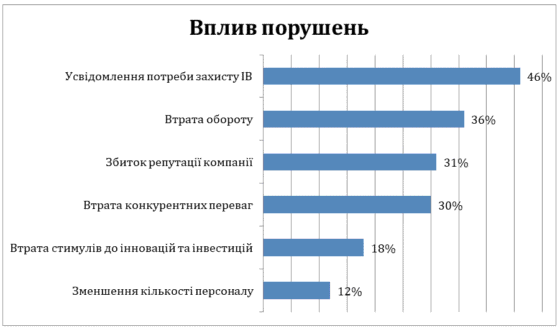
However, the most frequently cited consequence of such an infringement was a realisation of the need to protect intellectual property rights (this was reported by 46% of small and medium-sized enterprises that had been affected by the infringement).
Options for formalising cooperation with developers
Therefore, the proper formalisation of the relationship between the client and the developer is a fundamental prerequisite for the legal stability of an IT project.
There are several options for formalising cooperation, the most common of which are:
- An employment contract; this is the optimal solution for the ongoing development of an IT product, as it provides better protection and structuring of intellectual property rights, as well as simplifying interaction and the verification of work results.
- Service agreement; appropriate when engaging freelancers or external contractors to create an IT product, it ensures flexibility in cooperation and cost optimisation, but requires clear and detailed regulation of the transfer of intellectual property rights, as well as proper documentary confirmation of the results of the work performed.
At the same time, if your collaboration with the developer is at a stage where the IT product has already been created and new ones are planned, we recommend concluding the following simultaneously to structure the business and avoid negative risks:
- an agreement on the transfer of property rights (regarding the created IT product);
- an agreement on the provision of services and the transfer of property rights (to regulate the automatic transfer of property rights in the future).
Key terms of an agreement on assignment of economic (property) rights
When entering into an agreement on the assignment of economic rights, it is important to pay attention to the following key points:
First of all, the IT product must be described in detail, i.e., provide information that allows the product to be clearly identified: include links to GitHub, GitLab, Jira, Bitbucket, etc.
A well-known example of difficulties in transferring intellectual property rights is the dispute between Star Athletica and Varsity Brands. Varsity Brands, a leader in the cheerleading uniform market, sued Star Athletica for copying designs (stripes, zigzags, and chevrons) on sports uniforms. However, Star Athletica argued that these elements were functional and could not be protected by copyright because clothing is a “useful article.”
The U.S. Supreme Court sided with Varsity Brands and formulated the “separability test,” according to which a design applied to a useful article (such as clothing or furniture) is protected by copyright if:
- it can be imagined as a separate work of art (for example, a painting on canvas);
- it has independent artistic value and does not lose that value if it is “removed” from the item.
This case clearly demonstrates that general wording is not enough when transferring rights to a product. Simply stating “I transfer the rights to the uniform” is insufficient.
You must clearly describe the objects so that a court does not later conclude that these rights cannot be transferred as a separate IP object.
- Identify the author of the IT product by providing their details, including email and nickname.
- Clearly define the scope of economic rights: they may be transferred in full or in part. In case of partial transfer, any rights not explicitly listed in the agreement as assigned are deemed not transferred.
- Properly fix the moment of transfer: it is advisable to directly link it to the signing of the acceptance certificate. If this is not specified, economic rights will be considered transferred on the date the agreement is signed.
In Luxembourg, the Court of Cassation confirmed that the transfer of software rights does not occur automatically either through payment for development or through installation of the product in the client’s system. The court emphasized that IP economic rights must be transferred only on the basis of a clear written agreement; otherwise, the rights remain with the author. This approach applies even to software created on commission or within employment relationships.
Another example is the Anthony Levandowski vs. Waymo (Google) case, illustrating the risks of “toxic assets.” In 2016, engineer Anthony Levandowski left Google (later Waymo), taking 14,000 confidential files to his startup Otto, which Uber acquired six months later for $680 million. After discovering similarities in LiDAR technology, Google initiated litigation that ended in a settlement requiring Uber to pay $245 million (0.34% equity) and prohibiting the use of Waymo’s developments. Levandowski himself was fined $179 million and sentenced to 18 months in prison (later pardoned by Donald Trump).
This precedent proves that when buying a startup, you assume full responsibility for the origin of its intellectual property. If rights were not properly transferred from a previous employer, the product becomes a legal trap that can cost the buyer enormous financial losses.
- Include warranties for the customer: this provision protects the party in the future if claims are brought against them by the developer and/or third parties.
Conclusion
Properly documenting the transfer of rights to an IT product is прежде всего a tool for controlling the acquired intellectual property asset rather than a mere formal requirement. It determines who has the legal authority to manage the development results, make decisions regarding further use of the product, and protect it from unlawful actions of third parties.
Only properly documented economic intellectual property rights give the client the ability to fully own the IT product: not only to use it in their operations, but also to commercialize it — sell, license, scale, or attract investors. Without such documentation, even a technically successful product may become a source of legal and financial risks for the business.
Published on AIN
Share


Related articles








We use cookies to improve the performance of the site and enhance your user experience.
More information can be found in our Privacy Notice