

Hermes has set a precedent for protecting IP rights against NFT creators

Content of the article
Content of the article
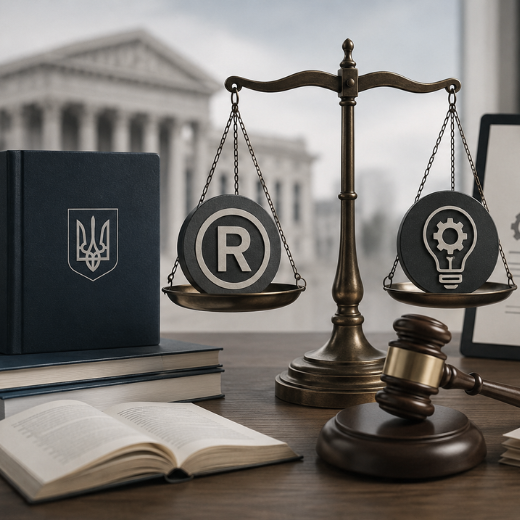
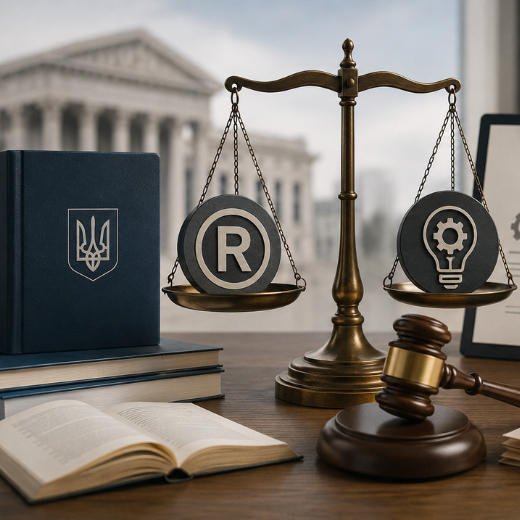
A US jury concluded on February 8 that an NFT called “MetaBirkins” had confused consumers by infringing on the trademark rights of the famous Birkin bags of the French fashion house Hermes.
This case is interesting as it shows how the law on the protection of intellectual property rights will apply to digital assets in the form of NFTs.

Hermes International lawsuit
It is worth recalling that a non-fungible token, or NFT, is a digital asset that establishes authenticity and ownership and can be verified on the Blockchain network. It’s a way to claim ownership of a digital file and can be compared to a certificate of authenticity you get when you buy a painting or other piece of art. At its peak, the digital collectibles industry was worth $40 billion, but fortunes plummeted last year as NFT sales fell 97 percent.
Hermes International called digital artist, MetaBirkins handbag designer Mason Rothschild a “digital speculator” and NFTs a “get-rich-quick” scheme in its lawsuit. And Rothschild, in turn, argued that the First Amendment to the US Constitution gave him the right to create and sell art depicting Birkin bags.
The case relies on the “Rogers test,” which checks the balance between artistic expression and trademark infringement. This test originates from the landmark case of Rogers v. Grimaldi, where a performer named Ginger Rogers sued the producers and distributors of a film called Ginger and Fred, claiming that the title violated the Langham Act (the main federal trademark law in the United States), giving the false impression that she was involved in the film in some way.
The Rogers test can be applied to noncommercial marks, which determines that the title of an artistic work is protected by free speech under the Langham Act if the title of the work bears some artistic relation to the underlying work and if the title does not mislead as to the content of the work.
For years, NFT creators have operated under the assumption that the decentralized nature of Blockchain, combined with First Amendment protections, will be sufficient to make any NFTs. However, in a lawsuit filed by Hermes International, the court makes it clear to creators that intellectual property law should be considered enforceable on the Blockchain and states the following:
“As an NFT is simply a code that indicates where a digital image is, identifying it and allowing it to be tracked for subsequent resale, the use of an NFT does not make the image an unprotected commodity.”
A review of these cases provides an understanding that NFTs exist at the intersection of intellectual property law and constitutional law.
After more than two days of deliberations, a jury awarded Hermes $110,000 for intellectual property infringement and $23,000 for cybersquatting — using a domain name confusingly similar to one used by the Paris fashion house itself. Although the author of the MetaBirkins bags disagrees with this decision and plans to appeal it further.
Digital solutions in the metaverse
Hermes is not the only one struggling with unauthorized NFT copying of its real assets. Every year, more and more companies create unique things using digital solutions in the metaverse.
The metaverse gives brands access to a whole new generation of customers who are typically younger than traditional buyers. There are many cases where digital items sell for more than their physical counterparts. As an example, the Gucci Dionysus bag was sold as a digital counterpart for the equivalent of $4,115, although the physical copy costs $700 less. But Gucci is not the only company that has joined the virtual universe, Tommy Hilfiger, Balenciaga, Dolce & Gabbana, Nike and many others compete with it.
Consulting firm McKinsey says in a recent report that “Because of the fashion industry’s ability to be both virtual and physical, it will be at the forefront of changing the metaverse. Many brands are already seizing the opportunity to launch virtual apparel to satisfy their consumers’ growing appetite for creating a digital identity.”
As an example, self-expression is as important to players in the virtual world as it is to other people in real life. With this in mind, Balenciaga introduced a selection of player skins and digital accessories in the wildly popular online game Fortnite.
The recognition of NFTs by advanced countries and their potential creates important prerequisites for the use of such digital assets. These can include things, paintings, music, videos, documents and other digital assets that people can digitize and use in the virtual world.
For their part, centralized trading platforms such as OpenSea, on which NFTs are sold, are building their own protection systems to automatically block potential violators and increase the authority of creators. However, NFTs remain on the blockchain forever and can potentially be accessed through other trading venues.
Conclusions
In summary, Hermes v. Rothschild sets an important precedent for non-fungible token creators and sets the stage for intellectual property law that applies to digital art and allows big brands to be banned from using similar names.
For our part, we are always happy to analyze intellectual property rights in NFT and Blockchain projects. In particular, we recommend that you draw your attention to:
🔹evaluate the project and options for obtaining and clearing IP rights;
🔹register the necessary objects by owners and transfer rights from participants, and developers;
🔹 prepare agreements and policies for the site, and service (terms and conditions, privacy notice, cookie policy, etc.);
🔹 to structure activities, prepare contracts and determine the necessary jurisdiction.
Share






We use cookies to improve the performance of the site and enhance your user experience.
More information can be found in our Privacy Notice