What changes from a business perspective
2.1. Software and AI = “Product”
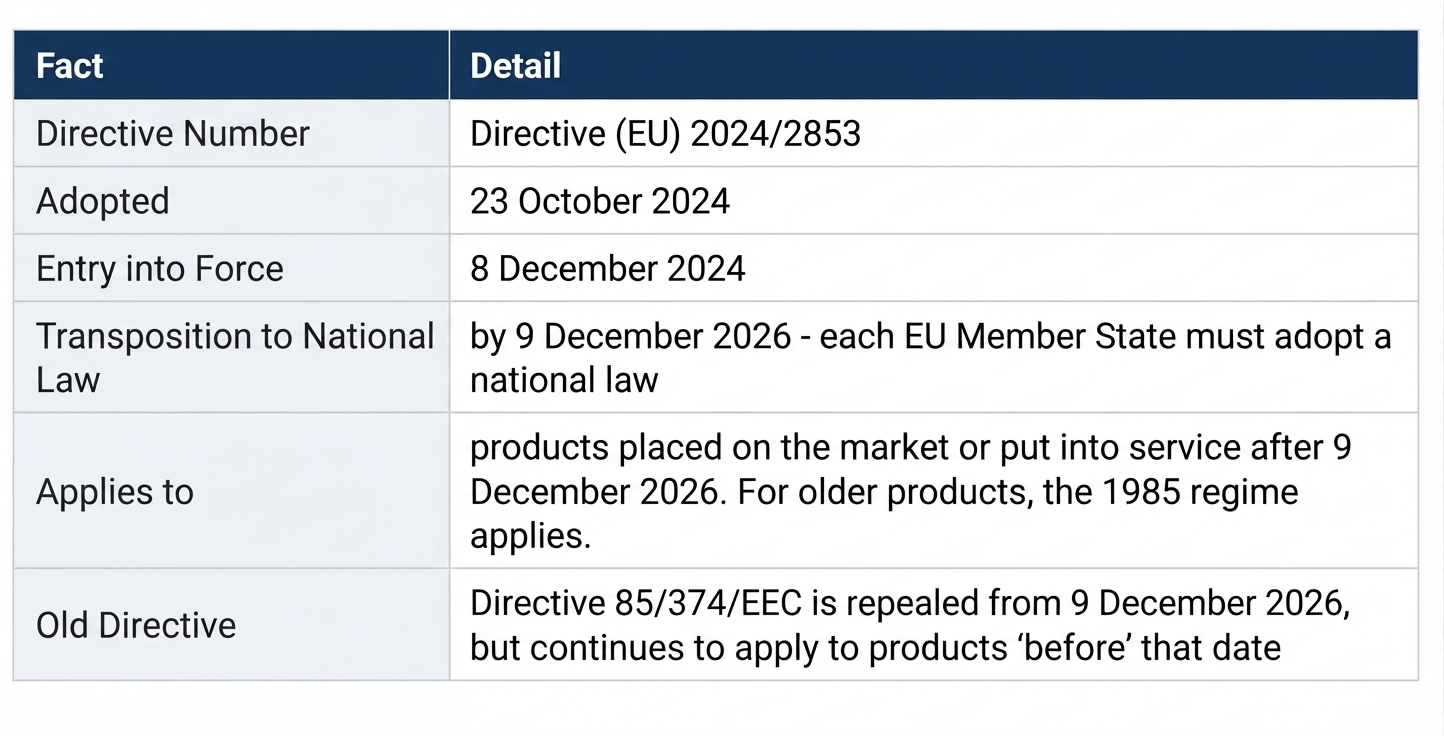
Key shift: PLD 2024 explicitly includes software in the definition of a “product” whether embedded, standalone, or as a service (SaaS/cloud), regardless of the delivery method. Integrated digital services (e.g., health monitoring working with a sensor), AI systems, and digital manufacturing files are also covered.
What this means practically: The strict (no-fault) liability regime that previously applied to physical products now extends to any IT or AI product you release on the EU market. There is no need to prove the manufacturer’s intent or negligence—it is enough to prove the defect and the damage.
2.2. Who is liable if the manufacturer is outside the EU
For products manufactured outside the EU, liability is distributed in a cascade: first the importer, then the authorized representative, and if none exist, the fulfillment provider. Separately, the component manufacturer and, under certain conditions, online platform operators.
Practical consequence for Ukrainian IT companies supplying products to the EU: if you do not have an official importer or authorized representative in the EU, a fulfillment provider or even a marketplace may turn out to be the defendant. And then recourse a claim against you.
2.3. What is considered a defect – including cybersecurity
The test is objective: “the safety that the public at large is entitled to expect,” taking into account the product presentation, technical characteristics, reasonably foreseeable use, and safety requirements.
Two new specific sources of defects critical for IT/AI:
Cybersecurity vulnerabilities – if a product has a known and unpatched vulnerability, this may constitute a defect.
Missing updates – if the manufacturer was supposed to provide safety updates but failed to do so, this is also a defect. The update policy becomes a legally significant document.
Autonomous and adaptive behavior of AI – PLD covers damage from post-sale changes via machine learning or OTA updates. If your model learned something harmful after release, liability does not disappear.
2.4. Presumptions – the main shift for plaintiffs
The strict (no-fault) regime remains, but proving damage has become easier. Three automatic presumptions:
Defectiveness is presumed if the defendant fails to disclose “necessary and proportionate” evidence; if the product fails to meet mandatory EU safety requirements; or if an “obvious malfunction” occurred during normal use.
Causal link is presumed if the damage is “typically consistent” with the defect.
In technically complex cases (AI, medical devices), the court presumes defectiveness and/or causality if the plaintiff showed this as “probable,” but proving it is “excessively difficult” due to the technical or scientific complexity of the product.
The last point is especially important for AI: model complexity no longer protects against a claim—it can work against you.
2.5. Disclosure of evidence
New mechanism: a plaintiff with a plausible claim can request judicial disclosure of evidence from the defendant. For continental Europe, this is effectively an element of discovery—an institution that traditionally did not exist there.
Consequence: internal technical documentation, risk assessment reports, incident logs, and correspondence regarding known vulnerabilities—all of this can be requested by the court. If documents are disorganized or contradictory, this will strengthen the plaintiff’s position, not the defendant’s.
2.6. What damage is compensated
Death or physical injury to a natural person—including medically confirmed bodily injuries.
Destruction or damage to property (excluding the defective product itself and property for exclusively professional use).
Medically confirmed psychological harm.
Loss or corruption of data—except for data of exclusively professional use.
The 500 euro threshold for property damage and financial caps for personal injuries have been abolished. This means smaller claims have become economically viable, including as representative (class) actions.
2.7. Limitation periods
3 years from the moment the plaintiff became aware (or should have become aware) of the damage, defect, and defendant.
10 years from the moment the product was placed on the market—general period.
25 years—for personal injuries with latent health damage (replaced the previous 10-year period).



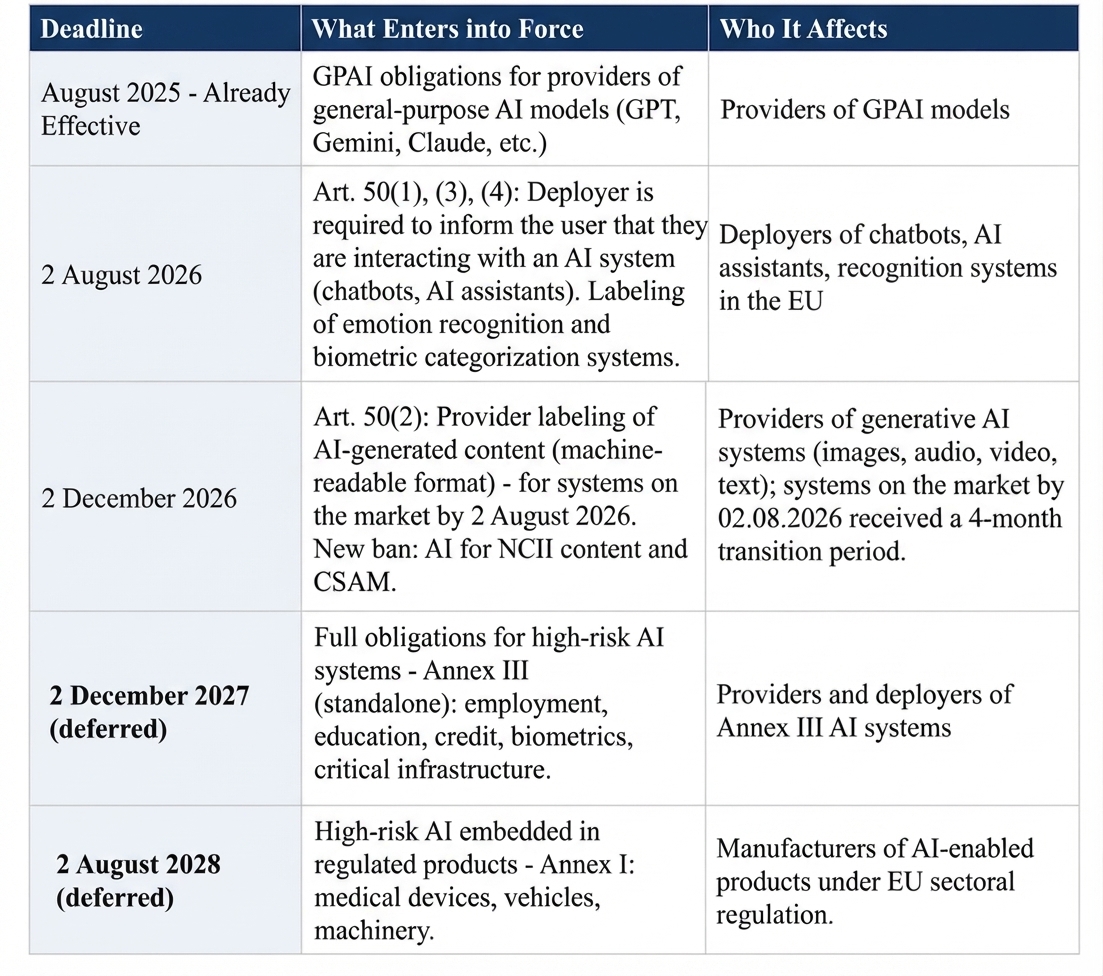
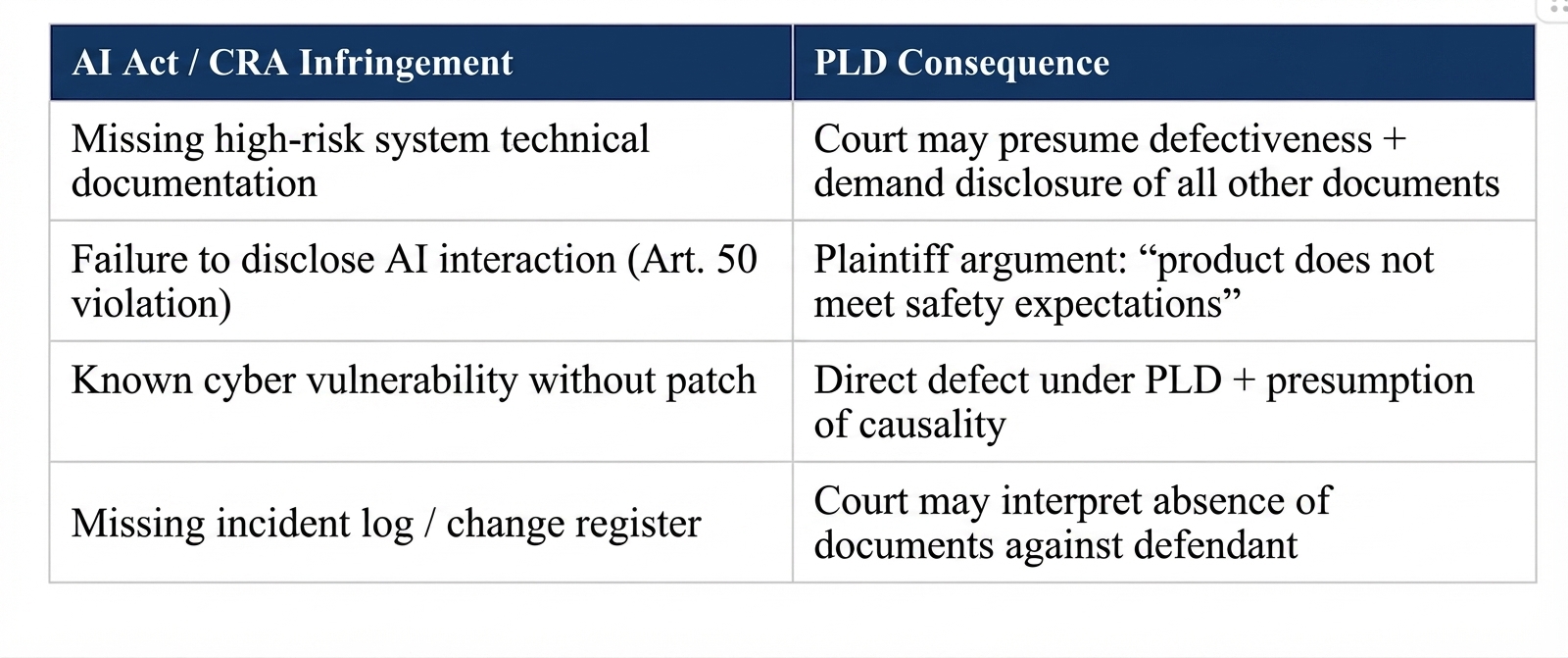 Therefore, compliance with the AI Act and CRA is not just a regulatory obligation. It is practical protection against product liability lawsuits under the PLD.