

Peculiarities of license agreements in the IT sector

Content of the article
Content of the article
A license agreement is an agreement under which an intellectual property owner (licensor) grants another party (licensee) the right to use its product, technology or brand under certain conditions.
In the IT sector, such agreements provide the right to legally use software, databases, trademarks, copyrights and patents, as well as other intellectual property, which is critical to avoid legal violations, uncertainty and problems with data protection.
In this article, we will review the main aspects of IT license agreements, including the main types of such agreements, key provisions and the main risks that may arise if they are not properly executed.
Copyright
Copyright (hereinafter referred to as “copyright”) is a system of personal rights of an author in various fields (literature, IT, science, art, etc.). Copyright usually defines the author’s rights to use his or her works and protects them from illegal use.
In Ukraine, the issue of copyright is regulated by the Law of Ukraine “On Copyright and Related Rights”. According to this law, copyright arises automatically from the moment a product is created. Copyright is usually transferred by signing a separate agreement that grants the right to allow another person to use various objects (code, design, script, music, etc.) under certain conditions. It is concluded in writing.
Objects of license agreements
The objects of copyright are the results of creative activity that are expressed in an objective form and meet the criteria of originality and novelty. Typically, these include new production technologies, original designs and shapes, company logos, the arrangement of elements on microcircuits, new plant varieties and animal breeds.
In the IT sector, the list of objects is slightly different and includes:
- Software – includes the program code, user interface and possible additional elements, such as a trademarked name or logo.
- Databases are organized collections of data that are stored and processed for future use. They are usually used in the form of a table.
- Mobile applications – copyright usually includes not the application itself, but the source program code, as well as graphic images, design, music, video, trademarks, etc.
- Algorithms are systematized instructions or a set of rules that determine how to solve problems or process data.
- Application Programming Interface (API) is a set of instructions and protocols that define how programs interact with each other through requests and responses, describing how to exchange data correctly.
- Cloud services are programs and platforms that provide access to computing resources, software, and storage via the Internet.
The sale does not transfer ownership of such objects, but only grants exclusive rights to use them in the form of a license. This allows owners or developers to commercialize intellectual property while retaining the right to own it.
Types of license agreements
The main provisions of license agreements include identification of the parties, description of the object of the parties and the main terms of the agreement, including the type of license.
As a general rule, a license agreement is divided into:
- Exclusive license agreement. It grants the other party the full right to use intellectual property, prohibiting third parties from doing so. For example, an IT company grants an exclusive license to software to one person in the United States, prohibiting them from licensing it to others in the same country. However, they can continue to use this license in the future and issue them in other territories.
- A non-exclusive license agreement. Allows third parties to use intellectual property, while the owner retains the right to transfer these rights to others and use them independently. For example, you have created a certain software (like a CRM system) and can provide it for use to an unlimited number of people for a fee. Here it is important to set restrictions on whether and to what extent these persons can modify the software. This is necessary to preserve the underlying code and obtain permission to make changes in accordance with the needs of customers.
- A sole license agreement. It is derived from the exclusive agreement. The licensee is the only one among third parties who can use the intellectual property, except for the owner. In the IT sector, this agreement is often used when a company grants a license to another company to integrate software, while reserving the right to use it to develop its own product.
- An open license agreement. Allows anyone to use intellectual property under the terms specified in the license. An example of such licenses is “Open Source” for the free use of software such as GNU, GPL or LGPL. These licenses are the foundation of the free software movement and are widely used for open source.
Key aspects of license agreements
One of the important aspects of license agreements is the regulation of the rights and obligations of the parties, which are agreed upon in the provisions of the agreement itself. In the IT sector, the scope of rights usually includes the right to:
- installing and using the software on designated devices;
- modifying, adapting or creating derivative products based on the software;
- accessing and using APIs for integration with other systems;
- hosting the software on cloud servers;
- storing, analyzing and processing data for internal use;
- integrating the licensed product into other systems;
- sublicensing the product to third parties.
The obligations under the agreement are also an important component, where the licensor must provide access to the IT object, documentation and technical support, and the licensee undertakes to use the object in accordance with the license, not to modify or distribute it illegally, to keep records of use, report violations and not to transfer rights without the licensor’s consent.
Another obligation is the territorial restriction of the license. For example, when the software can be available only to users in the European Union. The license may also be limited by the term of validity. In particular, the license may be valid for 1 year, after which the parties should either terminate the license relationship or renew the agreement.
A separate aspect of secure cooperation between the parties is financial obligations. Thus, by agreement between the parties, three types of license fees may be set:
- Royalties, under which the licensee pays a percentage of the income received from the use of the licensed object.
- Regular payment, where the licensee pays either monthly or annually to access the software. This model is often used for SaaS products.
- One-time payment, which provides for a one-time payment for the full right to use the software for the period specified in the agreement.
Conclusion
License agreements play a special role in the IT sector, where intellectual property, such as software, algorithms and databases, is a major asset of companies. They allow IT companies and startups to ensure the legal use of their innovative technologies by other companies and users, reducing the risks of legal disputes and copyright infringement.
However, when entering into such agreements, it is important to consider potential legal risks, such as unwanted ties to an unreliable partner, intellectual property infringement through unauthorized use of materials, data privacy violations, unclear interpretation of the terms of the agreement, and failure to consider legal aspects without the involvement of qualified lawyers.
It is also particularly important to avoid improperly drafted license agreements, which can lead to serious financial and legal consequences. Therefore, it is important to carefully draft the terms and conditions with the involvement of experienced lawyers to ensure that the agreement is properly executed and to avoid violating legal requirements.
Share


Related articles
Personal data after GDPR: new legal challenges


Attracting Investment in IT: Legal Aspects for Startups and Technology Companies

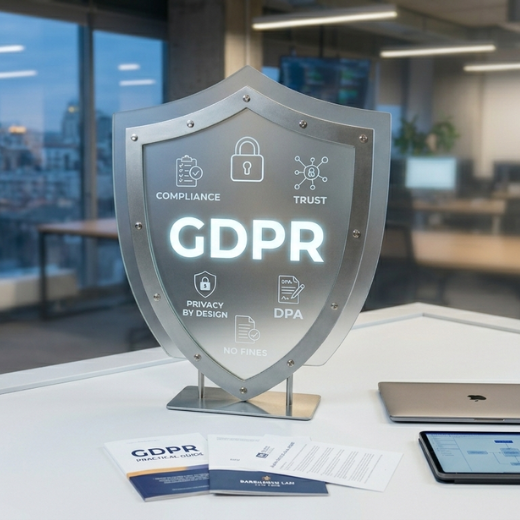
Compliance and Privacy (GDPR & Data Protection): compliance is not about paperwork, but about customer trust


Rights to an IT Product: How to Transfer Past IP Rights and Set Up Future Assignments


We use cookies to improve the performance of the site and enhance your user experience.
More information can be found in our Privacy Notice